


Bignor Farms - Farming in Harmony with the South Downs
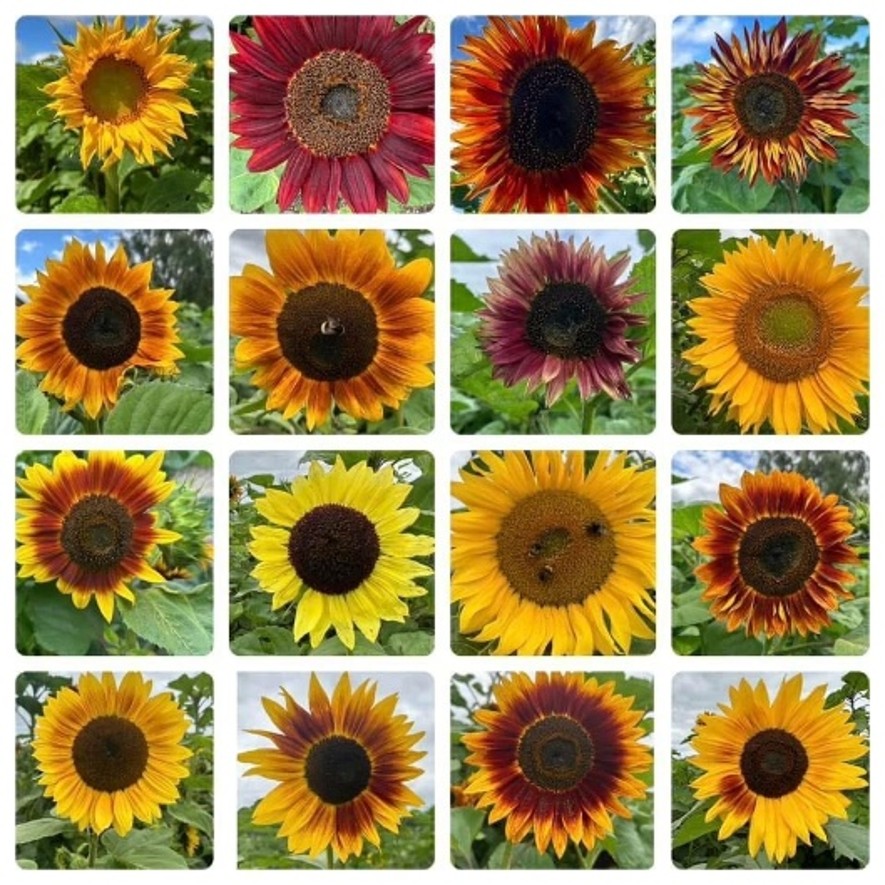
A selection of sunflower varieties you can find in the maze.
A Family Farm with Centuries of History
Nestled in the heart of the South Downs National Park, Bignor Farms is a 600-hectare family farm with a rich agricultural heritage. The Tupper family have farmed this landscape for hundreds of years, and today the business is managed by Will and Lisa Tupper, who continue to combine traditional farming values with modern technology and environmental stewardship.
The current arable rotation includes milling wheat, malting spring barley, stubble turnips and Sustainable Farming Incentive (SFI) options such as herbal leys. Over the years, oilseed rape, peas, beans and linseed have also featured within the rotation, allowing the business to adapt to changing markets and farming practices.
The focus remains on producing high-quality food while caring for the unique landscape that surrounds the farm. Sustainable practices, continual monitoring and the careful adoption of new technology underpin every management decision.
Farming with Technology and Practicality
Bignor Farms embraces innovation where it delivers genuine benefits. Precision agriculture plays a key role in improving crop performance and soil health, with technologies including:
- Direct drilling where conditions allow.
- Precision application of seed and fertiliser.
- Drone technology for crop monitoring.
- Soil health assessments, including earthworm counts.
- GPS-guided field operations.
However, technology is never used for its own sake. As Will explains, every field and every season is different. While reduced cultivation is often the preferred approach, the plough is still an important tool and is used whenever conditions dictate. The philosophy is simple: use the right tool for the right situation.
Livestock at the Heart of the Farming System
Livestock remain an integral part of the business, with a growing flock of more than 650 breeding ewes producing over 1,000 lambs each year. At peak times there can be close to 2,000 sheep grazing across the farm.
The flock has been developed over several generations, with the majority of breeding stock homebred and well adapted to the local environment. Keeping replacements within the flock helps minimise the introduction of disease while maintaining the characteristics best suited to the farming system.
More recently, Exlana Easy Care sheep have been introduced to reduce labour requirements, particularly around shearing and lambing.
Lambing begins outdoors each March, providing a natural environment for both ewes and lambs. Most lambs are finished and marketed before reaching one year of age.
Throughout the year, the sheep graze low-input chalk grassland on Bignor Hill alongside species-rich herbal leys established to support pollinators and other beneficial insects.
Sussex Cattle Supporting Conservation
Alongside the sheep, Bignor Farms maintains a small herd of traditional Sussex cattle, often seen grazing near the historic Bignor Roman Villa.
Renowned for producing excellent-quality beef, the cattle also perform an important conservation role. Their selective grazing and natural trampling help manage environmentally sensitive grassland, encouraging wildflowers and enhancing biodiversity across the farm.
A Farm Open to Visitors
Bignor Farms is more than a working farm. For over 200 years, visitors have been welcomed to explore the remarkable Bignor Roman Villa, one of Britain’s best-preserved Roman sites.
Today, the farm also offers a range of seasonal attractions, including:
- The Giant Sunflower Maze
- Pick-your-own Pumpkin Patch
- Educational farm visits
- Summer camping
These activities provide an opportunity for visitors to experience modern farming first-hand while learning about food production, conservation and the history of the surrounding landscape.
Precision-Designed Sunflower Mazes
One of the farm’s most distinctive attractions is its annual sunflower maze. Each design begins as a CAD drawing or scanned artwork before being converted into GPS guidance lines for precision drilling.
The result is a series of striking large-scale designs that combine modern precision farming technology with an enjoyable visitor experience, demonstrating how agricultural innovation can support both commercial farming and public engagement.
Written by Richard Cromie, CMP Agronomist & Partner